What are Embedded Fonts, and Why Do I Want Them?

Contents
Very simply, in the world of print layout and eBooks, font usage is what creates different looks. As a simple example, you can see what two different versions of the same eBook look like, one with an embedded font, and one without. Which is the more attractive? Which conveys that sense of commercial appeal, of polish, to the prospective reader, when they're looking at the Look Inside the Book?
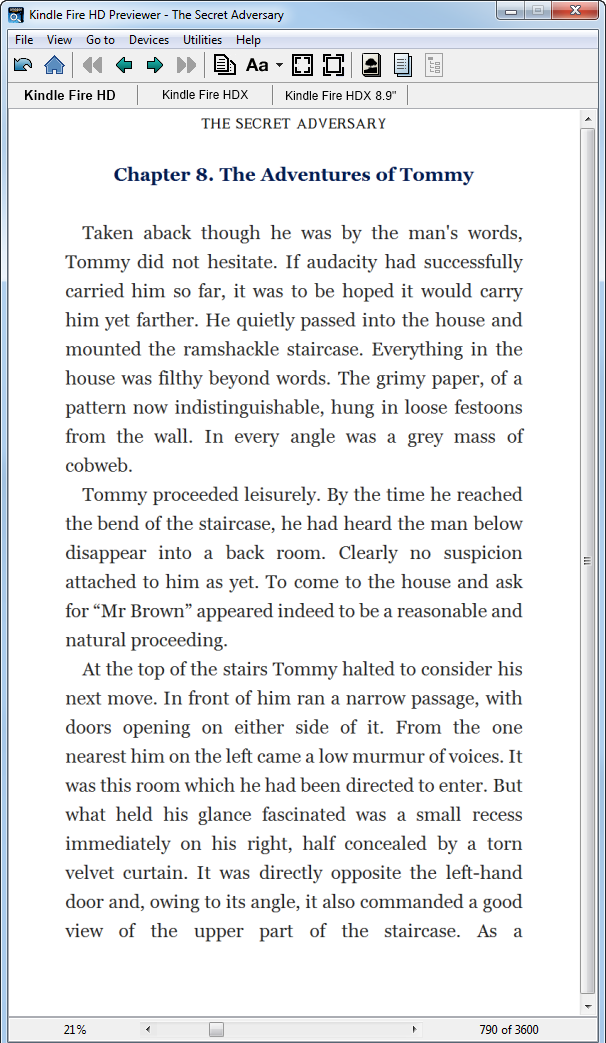
Chapter 8, "The Adventures of Tommy," without fonts, in a Kindle Fire.
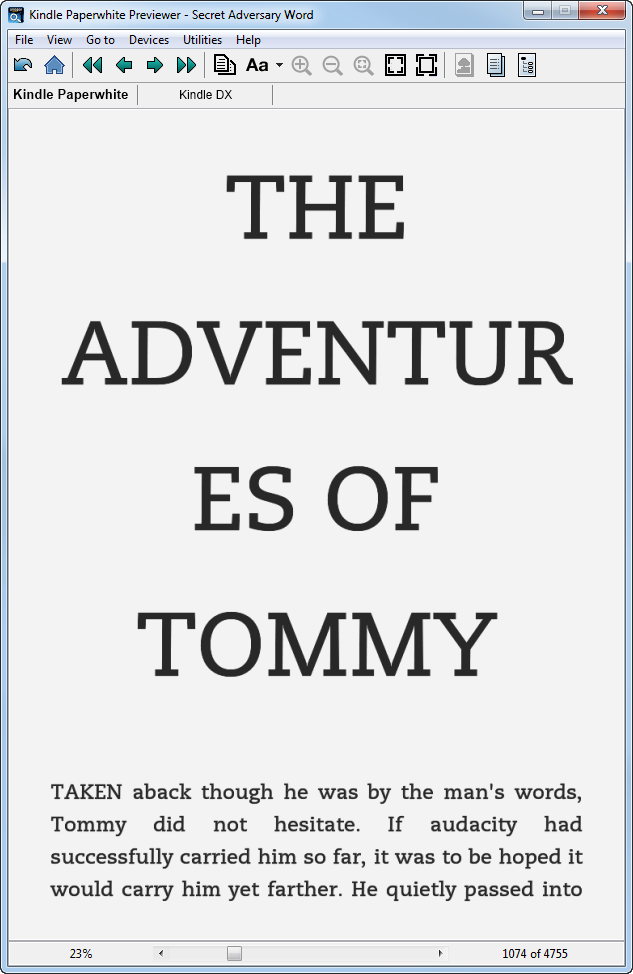
The same chapter, same Kindle--made from a Word file where the author tried to use fonts. Ooops!
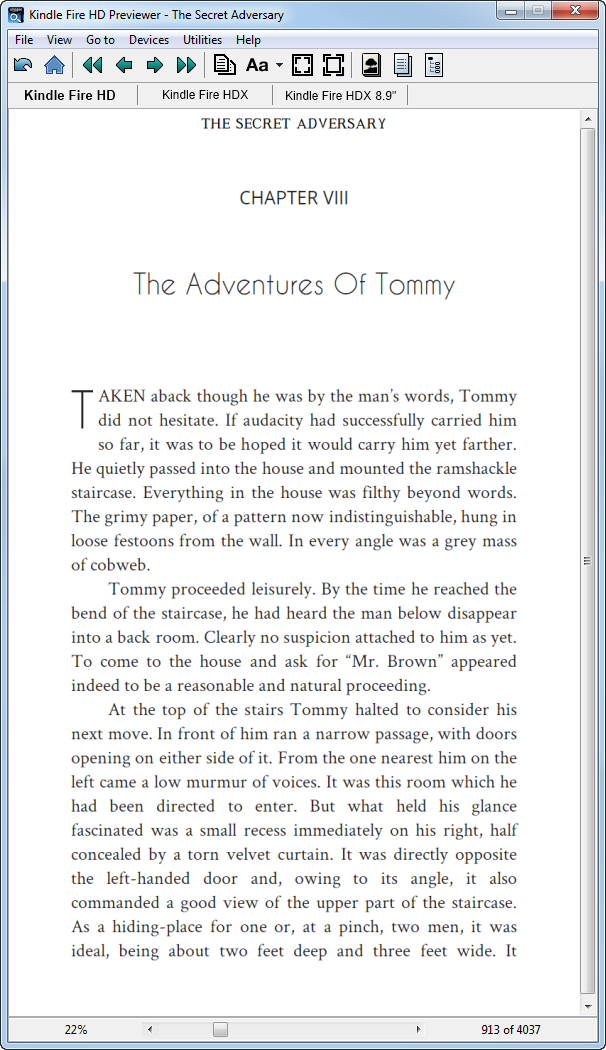
Finally, Chapter 8, The Adventures of Tommy, made by a commercial firm, using fonts and good eBook practices. A little font goes a long way, right?
OK, But, What Does "Embedded" Mean?
Here's the reality—you can type something up, in Word, and do everything in your power to make it beautiful. But, Word can't "carry" those fonts with it, through the KDP conversion, and into your eBook. Neither can a PDF—don't let anyone tell you otherwise. For a document—any document—a Word file, PDF, eBook, etc.—to display the fonts that you want other people to see, you basically have to send that document off, with a little suitcase, packed with its fonts. Otherwise, the computer (or Kindle or Nook, etc.) that receives that book or file can only display the fonts that are on it already. So, if you decide to use Comic Sans, for your headings, and you send that Word file to someone that doesn't have Comic Sans on their computer, they won't see Comic Sans. In the olden days, fonts were basically little-bitty pictures. Bitmaps, somewhat. You created a page, the pictures of all the letters of all the words on it, and when you copied it, or sent it off to someone to see, like an old-fashioned Galley, they saw what you intended.
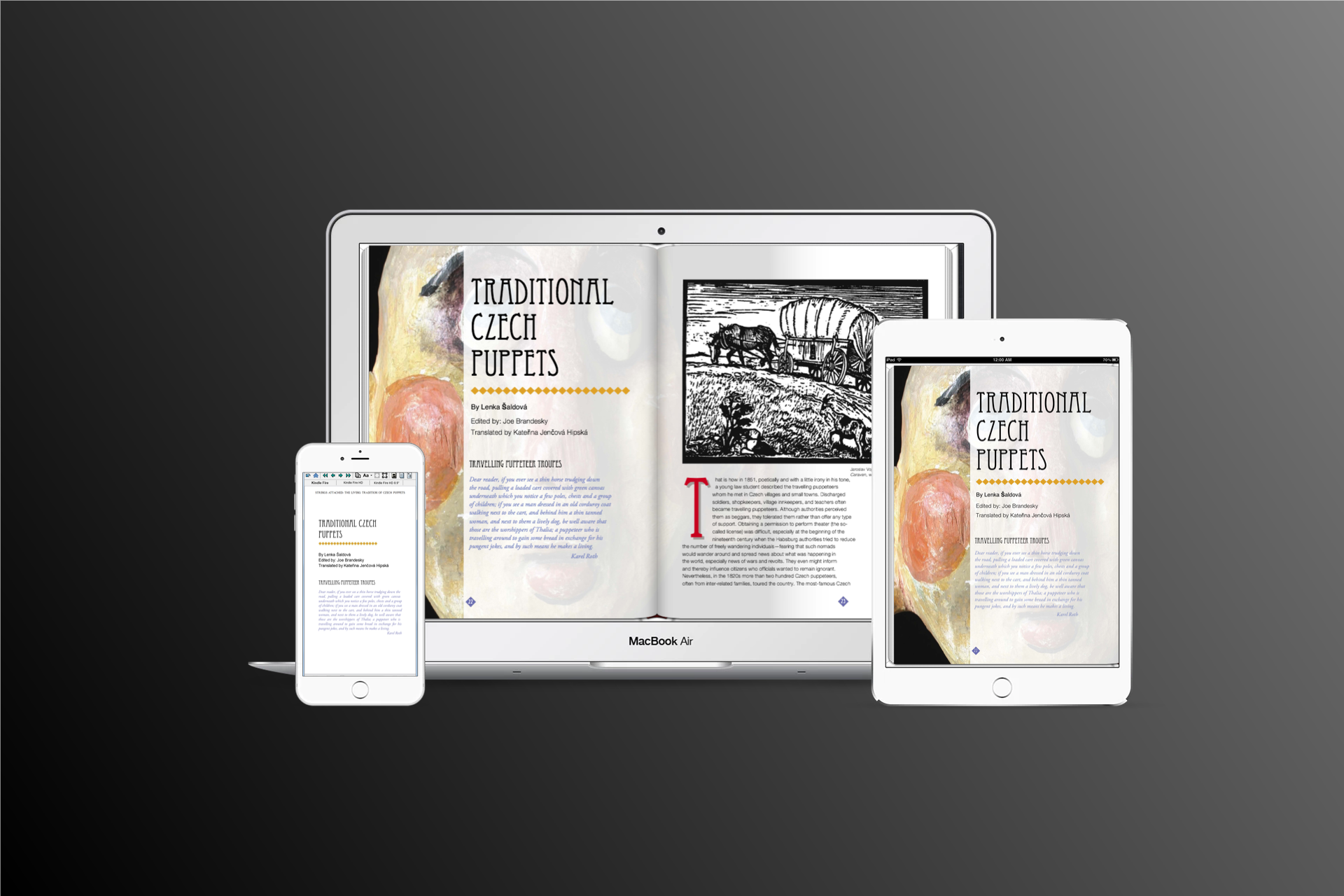
A book like "Strings Attached," shown here in iPad, tablet and iPhone versions, is only possible through the use of embedded fonts.
But that was then, and this is now. Modern fonts aren't little pictures—they're little programs. Just like you have to have a certain program on your computer, to open some types of files, your computer has to have a given font on it, for it to display it in a document. Or an eBook, or a PDF. I remember the first time I made up a PDF for Booknook, to send to clients, and how shocked and befuddled I was, when my then-minion Lenny1, (yes, believe it or not, our wee company has had not one, but two, Lennies. The Lenny that works on books for us now is Lenny2!) told me that he was seeing Courier! I'd used a completely different font. That was when I learned about embedding fonts.
Basically, what that means is that some programs have the ability to pack up the fonts that they are using, and "carry" them with them. You can embed fonts in Word, in PDFs—but for an eBook, you have to send the entire font file along with the eBook, carried deep inside it. To do that, you have to use HTML to make the book files, and you have to know how to embed the fonts—put the font files inside the eBook, so that the fonts display for the person who buys and reads the book. Also, you have to be careful when you do this, because if you do it incorrectly, you can accidentally distribute the font—in other words, give the font files away to people for free! You don't want to accidentally redistribute an Adobe font, trust me—they take this stuff very seriously, and you'll owe them millions if you do.
Put Another Way...
For the layperson, you can think of embedded fonts like your vacation clothes, in a suitcase. Let's say that you take a trip to Hawaii. (Or someplace else, if you're lucky enough to live in the Isles!). You get invited to a nice dinner. You think to yourself, "oh, I wish I had that gorgeous Dior dress in blue of mine to wear!" But if you didn't pack your Dior--well, you can't wear it, can you? Well, fonts for text are exactly the same thing. If the font that you want your text to wear isn't in a wee "suitcase" that is carried along with the text of the eBook, and it's not already on the device upon which the book is being read, guess what? Your text can't display (wear) that "Autumn in September" font you used in your print book, anymore than you can wear that Dior. The fonts you want the book to show (wear) have to be packed, right along with the text--just like you and your dress.
That's one of our areas of specialty, here at Booknook.biz, as it happens. :-)
As they used to say, kids, don't try this at home!