Book Anatomy 101

Contents
Verso and Recto
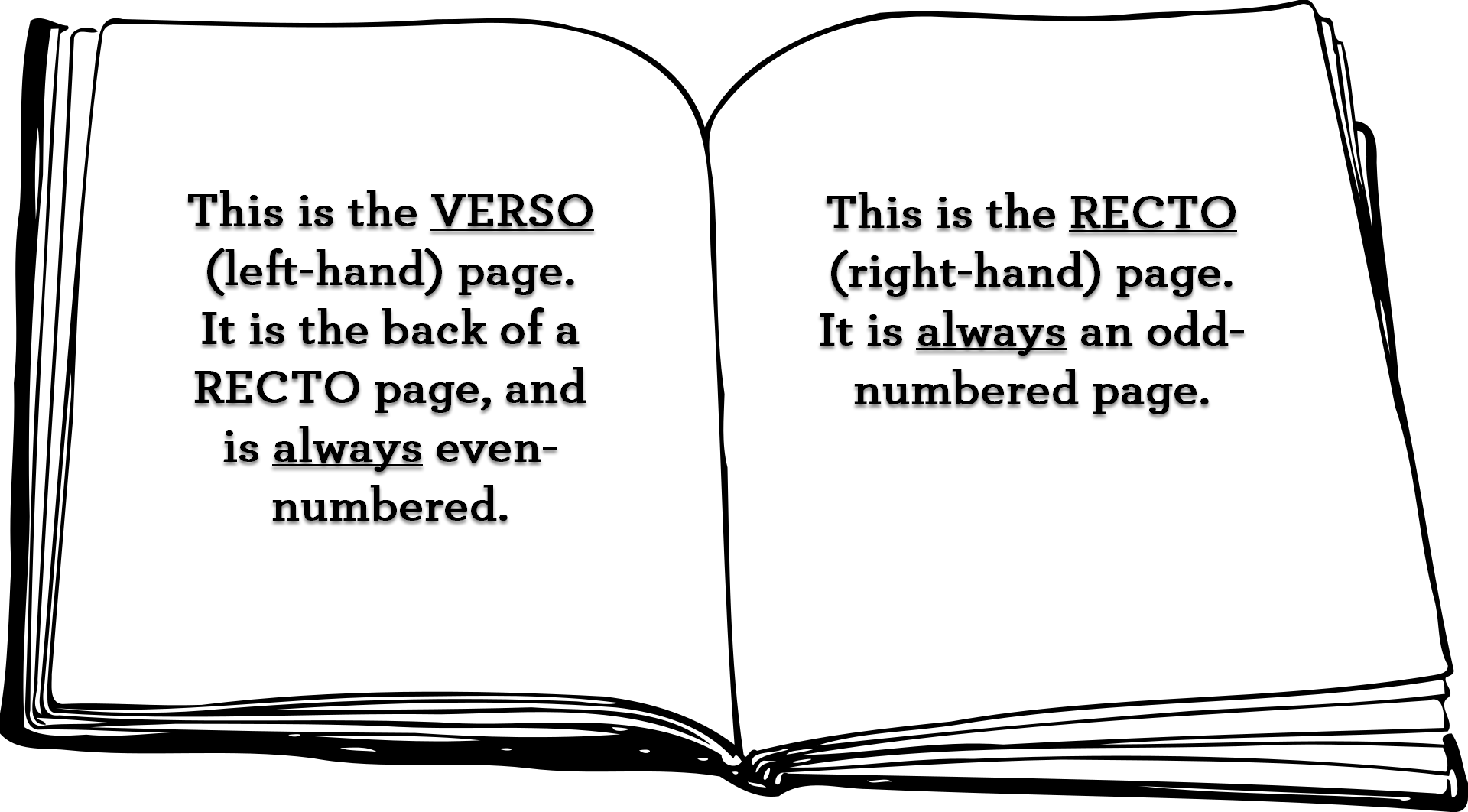
A Verso page is always on the left, and a Recto is always on the right. Your first chapter will always start on a Recto, or odd-numbered, page.
Page numbering
As mentioned above, left-hand pages (verso) are always even-numbered, and right-hand pages (recto) are always odd-numbered. If you think about it, it makes sense—it's impossible, in a country that reads left-to-right, to open a book to a verso page. That means that the first page of a book is always a right-hand page, and thus, always page number one (1).
Running Headers
At the top of the page, in almost every book, you'll see what are termed "running headers." Typically and traditionally, that means the author's name on the left, and the book's title on the right. In some non-fiction books, the chapter name will be displayed on the right, instead. See examples, below:

This is the Verso (left-hand) running head on Ken Follett's "Lie Down With Lions" as an example of a running head.
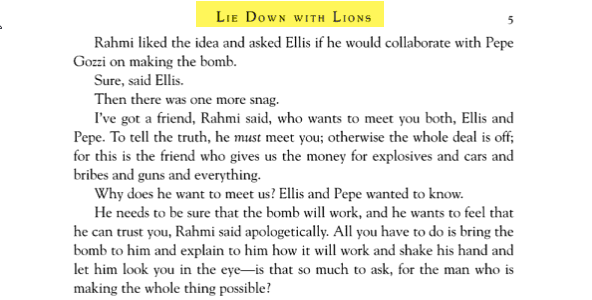
..and this is the Recto (right-hand) running head from the same book, showing the correct layout.
Blank pages/Push Pages
"Why are some of my pages blank?" is a question that we hear quite a bit. Very simply, this is because some pages are traditionally placed on recto (right-hand) pages, and sometimes, during layout, the pages don't lay out that way without the use of a "Push Page" (a blank, that "pushes" the content to a new page). For example, oftentimes, we'll find that the first chapter would, without a push page, show up on a left-hand page, which is typographically and traditionally wrong. So, we insert a push page, to move it to the right-hand page. If you'll pop open almost any book you have at home on your bookshelf, you'll see Push Pages at work.
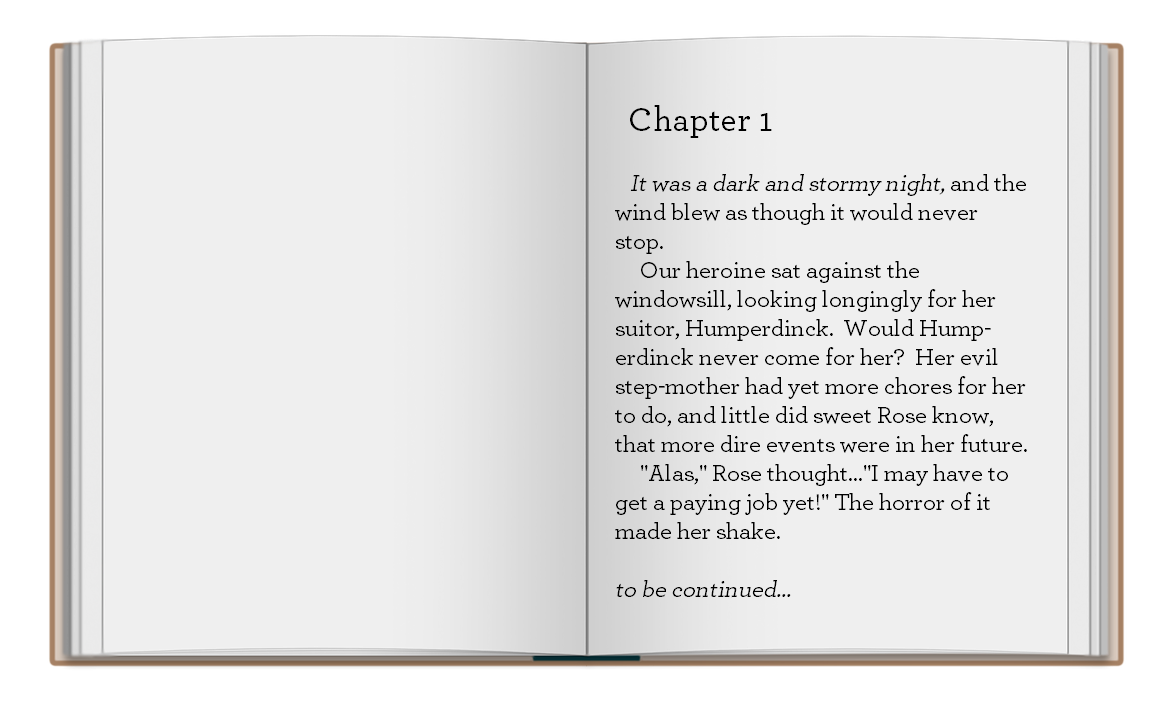
An example of a Push Page at work, moving Chapter 1 to a right-hand page.